Closing on your first home feels a little like stepping onto a moving sidewalk. Once it starts, everything slides forward fast: paperwork, keys, utilities, boxes, neighbors waving from across the street. The move itself can be the smoothest part of that sequence if you prepare with the right mindset and a few habits that experienced movers swear by. After thousands of moves in Round Rock, here is what consistently helps first-time buyers settle in without the usual scrapes and sore feelings.
The rhythm of a first-home move in Round Rock
Round Rock has its own tempo. Contracts often close at the end of the month, which concentrates demand for trucks and crews into a few days. Afternoon heat kicks up from late spring through early fall, and thunderstorms can appear suddenly, then vanish just as quickly. Streets like Sam Bass or Old Settlers can flow fast in the morning, then thicken by late afternoon. If you design your move to respect the local clock, you’ll reduce delays before they happen.
A good way to think about timing is to work backward from your closing date. Allow buffer days for funding to record, then aim to have your essentials, important documents, and valuables under your personal control before the first box leaves the old address. The people who look calm on moving day almost always front-loaded the thinking a week earlier.
What first-timers forget, and what to do instead
The most common misstep is packing in a hurry across too many rooms at once. That’s how a coffee mug ends up in a shoe box, and how you spend two days in the new kitchen looking for the can opener. Pack in zones. Finish the hallway closet, label it clearly, then move on. It’s slower per minute, faster per day.
Another miss is underestimating how long it takes to prepare furniture. Disassembling bed frames, wrapping glass shelves, and removing TV mounts often requires tools, bags for hardware, and labeled tape strips. The fifteen minutes you spend bagging and taping fasteners to the underside of a bed frame will save an hour that night when you’re tired and just want a mattress off the floor.
Finally, there is the handoff problem. People assume every item can go in the truck. Some can’t or shouldn’t: live plants during extreme heat, hazardous materials like propane or paint thinner, and sensitive medications or legal papers. Keep a dedicated car-load for this set and plan parking so you can unload directly into the new home without carrying your passport and prescriptions past a busy crew.
Why first homes feel more complicated than apartments
You might be moving fewer boxes than a family of five, yet it can feel more complex. A house adds appliances, outdoor gear, garage items, ladders, and sometimes a yard shed. There are also more entry paths and floors. First-time owners often discover how much time door protection, stair runners, and floor covering can add, especially with hardwood. Doing it right matters. Fresh paint and new flooring are expensive to fix if dinged on day one.
This is where a seasoned crew behaves a little bit like a pit team. They arrive, wrap the edges, and lay down protection before a single piece enters the home. It looks like they are losing time at the start, but they’re buying you a clean finish later.
How inNout Movers reads a first-time buyer move
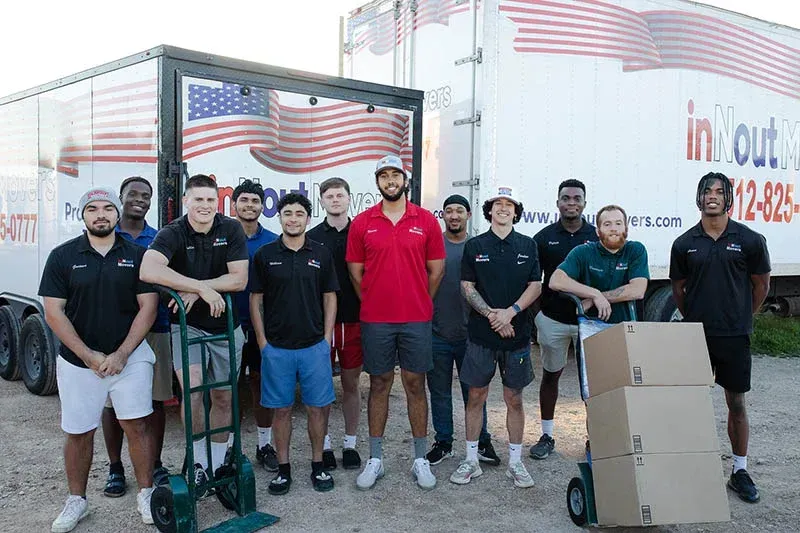
inNout Movers crews see a pattern with first homes. The two big friction points are schedule compression around closing and overpacking mixed boxes. When the timeline feels tight, you don’t need gimmicks, you need pragmatism: pack the kitchen early except for a simple “last two days” kit, stage boxes by room near the exit, and measure the largest furniture pieces against the new home’s doorways.
There’s also an emotional dimension. That first step onto your own porch carries weight. inNout Movers crews adapt to it by taking a beat with you during the first walk-through, confirming high-priority placements, then building the rooms in a logical order so you can start living the same day.
What to expect during your free in-home estimate with inNout Movers
Walkthroughs work best as conversations. A good estimator looks beyond the inventory and notes tight corners, stair turns, driveway slope, and the spacing of entry doors. They also ask about access windows for elevators if you’re moving from an apartment, HOA rules that restrict move hours, or medical needs that affect the day’s pace. If you own a king bed and a curving staircase, they will measure and propose a plan for either disassembly or an alternate entry path.
Be ready with a few specifics. If you plan to buy new appliances that week, say so. If you’re moving out of a garage stuffed with flat-pack shelves that need breakdown, mention it. Accurate estimates flow from full information, and a good crew leader builds the day’s sequence from that detail.
The complete moving timeline that actually holds up
Round Rock closings often land Thursday or Friday. Funding can post the same day, or it can roll to Monday. Design your timeline to work either way. Start with pre-packing the nonessentials two weeks out. Books, off-season clothes, wall art, and keepsakes can leave the shelves early with no impact on daily life. One week out, tackle the kitchen except a small set of basics. That same weekend, empty and defrost the refrigerator if it’s coming with you, wipe down the washer and dryer, and disconnect any water lines if you are comfortable doing so. Label hoses and power cords with painter’s tape.
Two days out, set aside the car-load of essentials: documents, medications, laptops, a few changes of clothes, basic toiletries, towels, bed linens, and the coffee setup. Pack a small tool roll, spare light bulbs, a power strip, and fresh batteries. On the night before, stage all boxes by room, stack them chest-high with heavy on the bottom, and leave clear walking paths. If you wake up on moving day and can walk through the home without sidestepping a single thing, you’ve done it right.
Packing fragile items without overdoing it
People either under-protect or mummify their fragile items. The sweet spot is rigid edges with soft interiors. For plates, vertical stacking with cushion between each piece resists shocks. For glassware, two layers of material around the bowl and a soft fill inside the cup prevents collapse. TV screens need a rigid face board, then soft wrap, then a fitted box. If you do not have a factory box, ask the estimator about TV cartons that size. They aren’t cheap, but cracked screens cost more.
Artwork demands a quick evaluation. Oil paintings can smudge if wrapped directly in plastic. Use glassine or paper first, then corner protectors, then a box that fits snugly. Mirrors need either a mirror pack or a custom frame. The mirror box looks narrow for a reason, and it keeps the piece upright where it’s strongest.
The first-home kitchen: how to pack so you can cook the first night
Kitchens take time. Small, sharp, and oddly shaped items hide in every drawer. Start by pulling duplicates. You do not need three spatulas in your two-day kit. Choose one saucepan, one skillet, a cutting board, a knife, a spatula, a spoon, a baking sheet, and four sets of dishes and flatware. Put them in a clear bin labeled “first meals.” Pack spices standing upright inside a sealed bag. Tape the lids of oil bottles and put them in a secondary bag. Seal dry goods that can spill, like flour or sugar, and consider moving them in the car if the heat index is high.
For the rest, treat drawers as families. Wrap and pack the entire drawer together so you reverse the process at the new home. Box labels that read “Kitchen - Drawer 3 - Baking” beat generic “Kitchen Misc” every time.
Managing pets and kids without stress
Moves run smoother when children and pets have a plan. If you can arrange a friend or sitter for a few hours, take it. If not, set up a safe room with snacks, water, and entertainment that the crew does not need to cross. Tape a note on the door. For anxious pets, a white-noise machine or a fan at the threshold helps. Give the crew a heads-up about the pet’s temperament and the plan for yard gates. A lost pet turns a calm day into a search party.
Families often worry about nap schedules and dinner timing. Build the day around two milestones: getting beds assembled before late afternoon and getting the refrigerator plugged in as soon as it arrives. You can live out of boxes for a day if the sleep and food anchors are secure.
Weather, trucks, and Texas reality
Round Rock heat changes the logic of a move. Afternoon loads on an August day take more energy than morning unloads, so crews will push hard early. Hydration breaks matter. Shade matters. For rain, the routine adjusts to protect floors and boxes. Crews stage items under cover, wrap cardboard with stretch film on the bottom, and roll out runners over thresholds. The move might slow, but the integrity of your belongings and floors stays intact.
If you’re planning a summer move, morning starts are worth the early alarm. Not just for comfort, but for the simple fact that heat affects adhesives and tape. Labels stick better and wraps hold tighter when applied in cooler hours.
How inNout Movers handles valuables and irreplaceables
Some items deserve extra attention even when they aren’t traditionally “fragile.” Family photo albums, childhood artwork, and important documents feel trivial to replace until you try. The best approach is separation. inNout Movers advises first-time buyers to keep a “do not load” zone for jewelry, passports, birth certificates, loan paperwork, and active medications. Laptops, backup drives, and camera gear also live in this group. These go in your car, not on the truck. Crews appreciate the clarity, and you’ll have peace of mind every mile.
For high-value belongings that must ride on the truck, insurance choices matter. Learn the difference between released value protection and full-value coverage. The first is standard but limited by weight, not by item value. The second costs more but aligns compensation with the item’s worth. First-time buyers sometimes balk at the premium, then regret it when a single mishap exceeds minimum coverage. Talk through scenarios during the estimate and choose based on what you own, not the average.
Furniture: prepare it like a pro
Beds, dressers, dining tables, and sectionals require a few habits. Wrap drawers in place where the furniture design allows, but remove them if the piece is heavy or the stairs are tight. Tape does not belong directly on finished wood. Use stretch wrap over a moving blanket to protect surfaces. For glass table tops, scratch protection along the edges makes the difference in tight doorways. Legs on dining tables typically come off with an Allen wrench. Bag and tape hardware to the inside of the taped table base so it doesn’t wander.
Upholstered furniture picks up dirt easily on moving day. Wrap arms and corners and consider plastic covers if rain looks likely. Sectional sofas with hidden clips should be separated and labeled by side, then reassembled in the new room. Measure doorways before you even start, especially in older Round Rock homes where interior door widths can vary.
Creating a moving inventory that works outside a spreadsheet
Inventories live or die by utility. If you never look at it, it isn’t helping. The most useful system for a first home is a simple room-based code. Assign a color or a short code to each room, label each box with its code and a sequence number, and note the highlight items: Box K-04: “Pantry dry goods, coffee grinder, French press.” The moment you need caffeine on day one, you’ll thank your past self.
This is where a little discipline at the door pays off. inNout Movers crews are used to parsing household logic at a glance, but they move faster when the boxes tell the same story every time they set one down. Keep codes consistent, and ask the crew to stack boxes so labels face out in the new rooms. That alone can save hours of rummaging later.
Your moving-day essentials, trimmed to what actually helps
You do not need a survivalist kit. You need a few items placed where you can reach them quickly. Think of it as a first-24-hours bag that fits in a single carry tote and a backpack. Include medications, chargers, a power bank, basic toiletries, a shower curtain and rings, towels, a change of clothes, a roll of toilet paper per bathroom, a box cutter, a small set of tools, painter’s tape, permanent markers, and a handful of zip-top bags. Add simple snacks and a case of water. Put this bag in your car, not near a stack of similar totes, so it can’t blend in and disappear onto the truck.
The best time to schedule your move in Round Rock
If your timeline is flexible, target mid-month and mid-week. Demand is lighter, parking is easier, and crews can often spend more time fine-tuning placement without the pressure of a late-afternoon second job. Avoid the last weekend of the month when possible. For school schedules, late May and early June get busy fast. Spring and early fall offer the best weather window, with fewer thunderstorm delays and less heat stress. If you need a Saturday in July, book earlier than you think you need to.
The real cost comparison: DIY vs hiring a professional crew
On paper, renting a truck and buying pizza for friends looks cheaper. It can be. It can also stretch into two twelve-hour days and a pulled back. The hidden costs are time, equipment, and damage risk. Appliance dollies, door jamb protectors, mattress bags, shrink wrap, and blankets add up. So do delays when you hit a stairwell that demands a three-person carry and you only have two friends left after lunch.
Professional crews compress time and control risk. They know how to angle a dresser through a tight turn without scraping paint and how to stage an unload so the refrigerator is back on power quickly. With inNout Movers, the most consistent feedback from first-time buyers is that the day felt easier than expected and that bedtime came with assembled beds, a made sofa, and a clear kitchen counter.
Questions to ask inNout Movers during your moving consultation
Make your estimator think with you. Ask how they would handle your heaviest item and your most delicate piece. Ask where they expect the bottleneck will be and how they’ll mitigate it. Ask about floor and door protection, truck parking, and whether a second trip might be wiser than forcing everything into one load if the driveway or access is tight. You’ll learn how the crew will behave when the plan meets reality.
It also helps to clarify communication. Who will be your point of contact on moving day, and how early will they confirm arrival? Will they text when they are in route? How do they handle last-minute changes, like a couch that turns out to be longer than listed?
Why Round Rock families keep returning to inNout Movers
Patterns matter more than promises. The crews who work Round Rock regularly know which neighborhoods allow street parking, when to avoid certain routes, and where a walkway turns into a trip hazard after dark. Over time, that local knowledge shows up as fewer dents, fewer surprises, and more moves that finish when they’re supposed to.
inNout Movers crews bring that local rhythm to first-time buyers by pacing the day for the home. If the garage is the natural staging zone, they build it early. If the main bedroom sits over the entry, they run a straight route and save you steps. If a thunderstorm sweeps in from the west, they pivot, protect, and wait fifteen minutes rather than risk soaked boxes. It looks simple when it works, which is the point.
Room-by-room setup that helps you feel at home that night
Start upstairs or at the farthest point from the entry and work back toward the door. Bedrooms first, then bathrooms, then the kitchen, and finally living spaces. Beds go up immediately, even if you won’t make them until later. Hang shower curtains and set out towels before the first sweat hits your brow. Plug in the refrigerator and leave the oven off until you know the kitchen ventilation is clear. If you have a laundry room, confirm that the dryer vent is unobstructed and the water lines are tight. Five minutes now spares a leak later.
For the living room, place the largest piece first, usually the sofa, then build around it. Avoid the temptation to open every box. Focus on function: a clear path from door to kitchen, a spot to sit and eat, and a clean counter to unpack the essentials.
Handling prohibited items and safety considerations
Even seasoned movers cannot transport everything. Propane, gasoline, fertilizing chemicals, and some solvents are off-limits for fire-safety reasons. Batteries in certain conditions and pressurized cans can cause problems if heated. During your estimate, walk through the garage shelves and ask what should be used up, donated, or properly disposed of before moving day. For round rock summers, even candles and crayons can make a mess if left in a box in a hot truck. Move them in your car or let them go.
The other safety consideration is lifting technique. If friends are helping with smaller items, remind everyone to lift with legs, keep the item close to the body, and communicate at every turn. Professional crews call out steps, turns, and set-downs. Imitate that cadence and you’ll avoid the classic back-porch misstep.
A realistic approach to decluttering before your first move
You don’t need minimalism. You need volume that matches your new rooms. Measure closet rods and pantry shelves at the new house and compare to what you own. If your shoe rack and coat collection exceed the linear feet available, thin them now. The same applies to wall art. If the new home has fewer wall expanses, prioritize the pieces you want to see every day and set aside the rest for donation.
First-time buyers often hold onto furniture that fit an apartment but fights a house’s scale. A small sofa dwarfed by a larger living room won’t grow en route. Be honest about it. Sell or donate, then give yourself permission to live innoutmovers.com Round Rock TX movers with a temporary gap rather than fill it poorly. Your home will look more intentional when you do buy.
The night before: a short checklist that makes the morning painless
- Clear and stage walkways, confirm parking, and set out door stops and floor protection by the entry. Charge phones and power banks, set your alarm, and put your essentials bag in the car. Empty and defrost the refrigerator if it’s moving, pad the inside with towels to catch melt. Confirm the crew’s arrival window and the access plan for both addresses. Get to bed earlier than you think you need to, even if a few boxes remain.
Those last few boxes move faster in the morning when you’re fresh. Trading midnight packing for six a.m. clarity is worth it.
What happens when something unexpected pops up
It will, occasionally. A sofa refuses a turn, a key doesn’t work, a storm knocks out power right as the truck pulls in. The difference between a headache and a story you laugh about later is the response. Crews that do this daily carry tools, pads, and patience. They’ll remove sofa legs, try a different entry, or pause to protect floors while the rain passes. Have a flashlight handy, know where the water shutoff sits, and keep your phone charged. You’ll feel prepared instead of pressed.
inNout Movers builds contingency into the schedule for first-time buyers, especially when an elevator, HOA rules, or narrow access could add steps. The goal isn’t to pretend the day will be perfect. It’s to be ready for it when it’s not.
After the truck leaves: the first week in your new home
Unpacking works better with themes than strict checklists. Give yourself a quick win on day two by finishing one complete room. The guest bathroom is a good candidate: it’s small, visible, and satisfying to complete. Then move to the kitchen and master bedroom, one at a time. Break down boxes as you go to keep floors clear. Keep a running donate box as you unpack, because you will find items that made the trip but no longer make sense.
Walk the house each evening for small punch-list items: a wobbly shelf, a door that sticks, a closet that needs a second rod. Tackle one per day. That momentum carries you through the first week without the dread of a Saturday lost to chores.
Why the brand of moving help matters for a first home
The difference between a crew that moves “things” and a crew that moves “homes” shows up in the small decisions. A home-focused team knows to set down the coffee maker where you’ll reach it the next morning, to keep hardware bags taped to the furniture they belong to, and to pause before bringing a damp dolly over new hardwood. inNout Movers treats first-time buyer moves as a blend of logistics and care, with attention to the emotions around the day. That doesn’t mean speeches or fuss. It means steady work, good protection, clear communication, and rooms that make sense when they’re done.
The long view: how to protect your investment while you settle
Once you’re in, think in layers. Set felt pads under furniture feet to protect floors before you slide a single piece. Anchor tall bookcases and heavy dressers to studs, especially if kids will be around. Confirm your smoke detectors and carbon monoxide monitors work. Photograph appliance serial numbers and file manuals where you can find them. Register warranties sooner than later, since those emails can get buried during an unpacking week.
Round Rock soil shifts with weather, so watch your doors and windows in the first months. If one starts to stick, note the pattern and bring it up with a professional if it persists. You’ll feel more at home knowing you’re tracking the health of the house as you fill it.
Final thoughts from the field
First homes ask for two things on moving day: preparation and pace. Preparation reduces risk and confusion. Pace keeps the day human. Start early, protect surfaces, stage smart, label clearly, and keep the essentials close. If you’re working with inNout Movers, use the in-home estimate to surface tricky items and to plan for weather and access. Ask the crew leader to walk the home with you before the first carry and again before they leave. Those five minutes at the start and finish tend to be the best-spent time of the entire day.
You’ll remember crossing the threshold, not the number of boxes. The right habits make sure that memory is a good one.
InNout Movers LLC 1111 Wonder Dr, Round Rock, TX 78681 +1 (512) 537-3508 https://www.innoutmovers.com/ InNout Movers is your top-rated moving company in Round Rock, TX, dedicated to making your relocation experience stress-free. Since 2019, we have provided high-quality residential and commercial moving services across Williamson County and the Greater Austin area. We specialize in full-service packing, labor-only loading and heavy item transport (pianos and safes). Don't risk your valuables - hire the trusted Round Rock movers who know the local area best.